
India, the biggest contributor to world demand for oil, will bring into effect in an overhaul of its drilling policy. This comes after more than a year of preparation and will boost the exploration and development of India's oil and gas sector along with increased participation by foreign drillers

Since February 2025, the RBI has reduced the policy rate by 100 basis points. In its previous policy review in June, it had trimmed the repo rate by 50 basis points to 5.5 per cent.
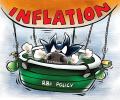
The Reserve Bank of India (RBI) has projected retail inflation at 4.2 percent for the next financial year beginning April while retaining the forecast for 2024-25 at 4.8 percent. The central bank attributed the expected easing of inflation to good kharif production, winter-easing in vegetable prices and favorable rabi crop prospects. However, the RBI also noted that continued uncertainty in global financial markets coupled with volatility in energy prices and adverse weather events presents upside risks to the inflation trajectory.

Persisting uncertainties related to the US trade policies pose downside risk to the overall demand in the Indian economy while the inflation outlook for the near term has become more benign than anticipated earlier, RBI said in its latest bulletin on Thursday. In the August bulletin, the Reserve Bank of India (RBI) also said that India's sovereign rating upgrade by S&P bodes well for capital inflows and sovereign yields, going forward.

Reserve Bank Governor Sanjay Malhotra on Wednesday said there is no proposal to levy any charge on UPI transactions.

While the new income tax law replaces the Income Tax Act, 1961 and omits 13 offences, 35 actions and omissions continue to attract criminal liability under 13 provisions.

If they act now, they can reshape the strategic map of Asia without firing a shot. If they wait, the next opportunity will come only after a serious Taiwan Strait incident -- by which time the price will be far higher, and the room for boldness far smaller -- the opportunity may well be lost by then. The question is no longer whether this can or should be done, points out Varun Arya.

IT company Infosys on Thursday posted 13.2 per cent increase in consolidated net profit at Rs 7,364 crore for the second quarter ended September 30, 2025.

The Reserve Bank on Wednesday revised upward its growth estimates for the current fiscal year to 6.8 per cent and lowered its inflation projection to 2.6 per cent based on an above-normal monsoon and the rationalisation of GST rates.

Movement in the equity market this week will be guided by a host of macroeconomic data announcements, global trends and trading activity of foreign investors, analysts said. Stocks markets concluded the last week on a subdued note, as investors grappled with global uncertainties.

The unique investors' base on the National Stock Exchange of India (NSE) crossed the 12-crore mark on September 23, with the latest 1 crore addition taking place in just eight months, the bourse said on Thursday.

Capital investment by the private sector is likely to rise 21.5 per cent to Rs 2.67 lakh crore in 2025-26 aided by robust macroeconomic fundamentals, and a 100-bps policy rate cut, according to an RBI article. Despite global uncertainties, Indian firms entered the 2025-26 fiscal year with healthier balance sheets, higher cash buffer, improved profitability, and greater access to diversified funding sources, said the article 'Private Corporate Investment: Growth in 2024-25 and Outlook for 2025-26' published in the Reserve Bank of India's (RBI's) August bulletin.

The Asian Development Bank (ADB) on Wednesday lowered India's growth forecast for FY26 to 6.5 per cent from 6.7 per cent on account of trade uncertainty and higher US tariffs that are expected to impact exports and investment. Despite the downward revision from the April 2025 Asian Development Outlook (ADO), India remains one of the fastest-growing major economies in the world.

GST Reform 2.0, which trims tax slabs from four to two, signals a push for demand-led growth, and together with recent income tax cuts, sets the stage for sustained economic growth, experts said. The Goods and Services Tax (GST) Council on September 3 approved an overhaul of the indirect tax regime by taxing essentials at 5 per cent and other goods at 18 per cent. A new 40 per cent tax will be applicable on luxury and sin items.

These changes certainly bring India's GST a lot closer to what an ideal GST would look like, points out Karan Bhasin.

The Reserve Bank of India on Friday decided to keep the policy rate unchanged for the 11th time in a row but sharply lowered the GDP growth forecast to 6.6 per cent for the current fiscal, as against earlier projection of 7.2 per cent. The Reserve Bank of India (RBI) maintained the status quo on interest rate despite July-September quarter GDP growth falling to 7-quarter low of 5.4 per cent, as against its own projection of 7 per cent.

The government has no say in where the country's refiners source oil from because these are commercial transactions.

The disbursement of the second tranche comes on a day when the International Monetary Fund is holding virtual discussions on Pakistan's upcoming budget, as the visit of its mission to Islamabad was delayed due to security concerns in the region.

Indian government's decision to cut GST rates on various products will increase purchasing power of consumers and boost demand for residential properties in the upcoming festive season, according to realtors' body CREDAI. The association, which has a 13,000 members from across India, said the construction cost is expected to come down because of reduction in GST rates on cement and few other building materials.

Finance Minister Nirmala Sitharaman on Friday said the world is facing "profound imbalances" in trade and energy security, and is undergoing a structural transformation, with India standing out as a 'stabilising force' that can withstand external shocks.

Retail inflation slipped to 1.54 per cent in September from 2.07 per cent in the preceding month mainly due to subdued prices of food items, including vegetables and pulses, according to government data released on Monday. The consumer price index (CPI) based inflation was 5.49 per cent in September 2024.

Among the Sensex firms, Sun Pharmaceuticals, Tech Mahindra, HCL Technologies, Infosys, Bajaj Finance, Eternal, Tata Consultancy Services, UltraTech Cement, Bajaj Finserv, Tata Steel, ITC and L&T were the major laggards. Asian Paints, Mahindra & Mahindra, BEL, Adani Ports, State Bank of India, Trent, HDFC Bank were among the gainers.

Prime Minister Shigeru Ishiba's sudden resignation after only a year in office has thrown Japan into political turmoil, raising doubts about how the country will handle economic and regional challenges, observes Dr Rajaram Panda.

Mixed views were expressed by top economists on the Reserve Bank of India's (RBI) Monetary Policy Committee's (MPC) decision to hold the repo rate at 5.5% and maintain a neutral stance. While some say the decision was as expected and one more rate reduction is expected this fiscal, there is also a view that rate cut by MPC was warranted given the evolving global situation.

The first issue is inflation, which has been widely discussed. The government is now rightly working on reversing fiscal and monetary stimulus to manage the inflation pressure.

Finance Minister Nirmala Sitharaman on Thursday asked India Inc to take advantage of the policies and reforms undertaken by the government and no longer hesitate to invest more and expand capacities. Sitharaman also asked the industry to partner with the government for skilling the youth and also to engage with the government throughout the year, and not just before the Budget.

Equity markets this week would keenly track the upcoming GST Council meeting, macroeconomic data announcements and trading activity of foreign investors for further movement, analysts said. Moreover, developments related to tariff negotiations, global market trends and auto sales data would also drive investors' sentiment.

State Bank of India, Adani Ports, Tata Consultancy Services, ICICI Bank, Reliance Industries and PowerGrid were also among the laggards.

Andhra Pradesh will establish two expansive integrated space cities in Lepakshi and Tirupati, spanning around 33,000 acres.

Indian economy grew by 7.8 per cent in April-June -- the highest in five quarters -- before the disruptive US tariffs were imposed.

The GST Council on Wednesday approved a two-tier rate structure of 5 and 18 per cent, which will be implemented from September 22.

The Trump administration has announced a massive increase in H-1B visa fees, imposing a $100,000 annual charge that will fundamentally alter how American companies hire skilled foreign workers, particularly impacting Indian IT professionals who comprise the largest group of beneficiaries.
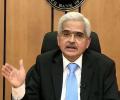
Reserve Bank Governor Shaktikanta Das on Tuesday said the fiscal-monetary coordination was at its best during the last six years even as he thanked Prime Minister Narendra Modi for giving the opportunity to head the monetary authority of the country. Das, in a series of posts on X, on his last day of his six-year term as RBI Governor, also thanked the Finance Minister, various stakeholders and his colleagues at the central bank.
The 25 per cent US tariffs, plus a penalty for Russian imports, could dent India's GDP growth by 30 basis points in the current fiscal, but the higher duty is unlikely to significantly affect India's domestic demand-driven economy, Barclays said on Thursday. If the 25 per cent tariff, announced by US President Donald Trump on Wednesday, is implemented from August 1, the effective average US import tariff on Indian goods will rise to 20.6 per cent in trade-weighted terms, as per Barclays estimates.

'The US reciprocal tariff has added another element of uncertainty and the central bank may prefer to wait and get further clarity.'

India's economy could reach $20.7 trillion in terms of purchasing power parity (PPP) by 2030 and may emerge as the second-largest economy by 2038 with $34.2 trillion GDP, an EY report said on Wednesday. The report also said that with appropriate countermeasures, India can limit the adverse impact of higher US tariffs on selected Indian imports to about 10 basis points of real GDP growth.

Public sector banks (PSBs) have written off bad loans of about Rs 5.82 lakh crore in the last five financial years, Parliament was informed on Tuesday. During 2024-25, the loan write-off of PSBs was at Rs 91,260 crore, compared to Rs 1.15 lakh crore in the previous fiscal, Minister of State for Finance Pankaj Chaudhary said in a written reply to the Rajya Sabha.

Some of the key names include: Maruti, M&M, Ashok Leyland, Britannia, Ultratech, JK Cement, Havells, Voltas, Amber, Metro, Trent, LemonTree, Indian Hotels, Niva Bupa, HDFC Life, IGL, Acme Solar, Suzlon, Swiggy, Delhivery, ICICI Bank, HDFC Bank, Bajaj Finance, Shriram Finance," according to a report by Motilal Oswal Financial Services.

The need for a manufacturing policy, reining in food inflation and raising investment in the country were among key suggestions given by economists who met Finance Minister Nirmala Sitharaman and senior ministry officials in the first round of pre-Budget consultations on Friday.

Plans for big bang reforms in the GST regime by Diwali, the Putin-Trump summit and S&P upgrading India's sovereign credit rating are likely to instil optimism in the domestic equity market in the week ahead, analysts said. Besides, trends in global markets and the trading activity of foreign investors would also impact domestic investors' sentiment.
